
Workforce Crisis vs. Technology Solutions: Which Strategy Will Future-Proof Your Home Health Agency's Growth in 2026?
This comprehensive analysis explores why home health and hospice agency owners must integrate workforce and technology strategies to future-proof growth in 2026. Rather than choosing between people or tech investments, successful agencies are using combined approaches to command premium valuations while addressing Medicare payment cuts and chronic staffing shortages. The article provides a 12-month action plan specifically designed for owners considering strategic partnerships or exit planning.
1/12/20266 min read
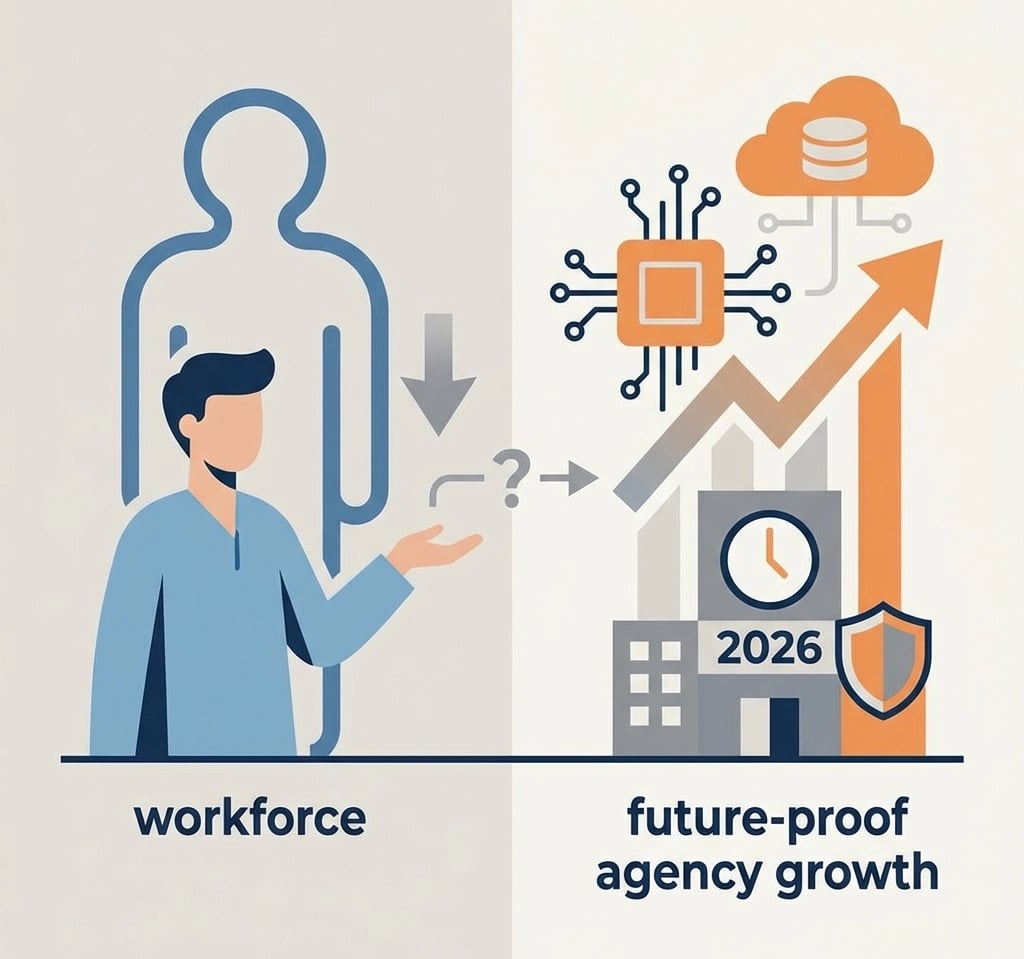
The ongoing debate between investing in workforce solutions versus technology upgrades is missing the point entirely. For home health and hospice agency owners planning for growth or exit in 2026, the question isn't which strategy to choose: it's how to integrate both approaches while Medicare payment pressures intensify and buyer expectations evolve.
Quick-Scan Summary: What Agency Owners Need to Know
The Reality Check:
• CY 2026 Medicare cuts of 6.4% will hit $5M revenue agencies with approximately $300,000+ in lost annual income
• Industry needs 740,000 additional home care workers over the next decade while current workforce faces 40% turnover
• Technology alone cannot solve workforce shortages, but workforce investment without tech optimization limits scalability
The Strategic Response:
• Top-performing agencies are using integrated workforce-tech strategies to command 15-25% valuation premiums
• Buyers prioritize agencies with both stable clinical teams AND demonstrated operational efficiency through technology
• 12-month preparation window exists to position your agency as acquisition-ready before market consolidation accelerates
Bottom Line for Owners:
• Neither workforce-only nor tech-only strategies will future-proof your agency
• Integrated approach directly impacts EBITDA margins and exit multiples
• Agencies demonstrating both clinical stability and operational scalability are attracting premium buyer interest
The Workforce Crisis Math That's Hitting Owner Bottom Lines
The numbers behind the workforce shortage aren't just industry statistics: they're direct hits to agency profitability. With the CY 2026 Home Health Proposed Rule introducing a net 6.4% reduction in Medicare payments, agencies face an immediate squeeze: lower reimbursements while competing for increasingly expensive clinical talent.
For a typical $5M revenue agency with 70% Medicare mix, this translates to roughly $210,000 in lost annual revenue before accounting for workforce cost inflation. When median home health aide wages hover around $17 per hour while agencies charge consumers $34 per hour, the margin compression becomes severe under payment cuts.
The retention challenge compounds the problem: 40% of the workforce lives in low-income households, creating constant turnover as clinicians leave for hospital roles offering better compensation. This turnover cycle costs agencies an estimated $3,000-$5,000 per departing aide when factoring in recruitment, training, and productivity losses.
For hospice operators specifically: The workforce pressure is equally intense, but with different dynamics. Hospice requires specialized training and emotional resilience that makes replacement even more costly. Many hospice agencies report 6-8 week training periods for new clinical staff, during which productivity and quality metrics suffer.
Where Technology Fits (And Where It Doesn't)
Technology solutions are essential for optimization, but they cannot solve fundamental workforce economics. Data-driven HR platforms, automated scheduling systems, and digital hiring tools can improve retention insights and streamline operations. However, they cannot address the core structural issues: insufficient reimbursement rates and geographic wage competition.
What technology can do for workforce management:
• Predictive analytics to identify retention risks before clinicians leave
• Automated scheduling that reduces administrative burden and improves work-life balance
• Digital onboarding platforms that compress training time and improve new hire experience
• Performance tracking systems that enable merit-based compensation adjustments
What technology cannot fix:
• Base wage competition with hospitals and skilled nursing facilities
• Geographic cost-of-living pressures in high-demand markets
• Immigration policy barriers affecting one-third of home care workers
• Fundamental reimbursement inadequacy that limits sustainable wage increases
The Integrated Strategy That Buyers Actually Want to See
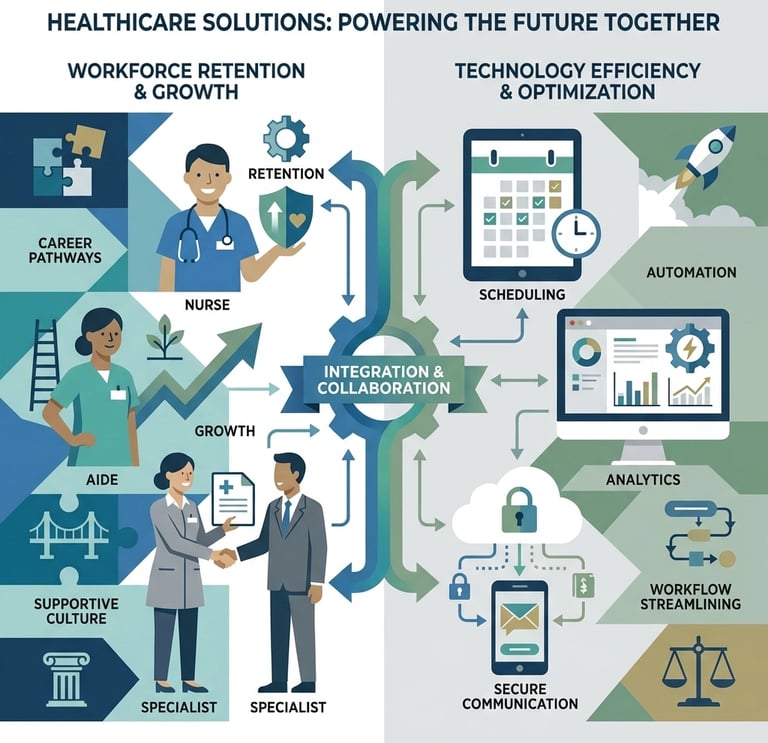
Private equity and strategic buyers evaluating home health and hospice agencies are specifically looking for operators who have cracked the code on both workforce stability and operational efficiency. This isn't about choosing between people and technology: it's about demonstrating that your agency can scale while maintaining clinical quality.
The buyer checklist for workforce-tech integration includes:
• Clinical team retention rates above industry average (targeting 70%+ annual retention)
• Technology platforms that provide real-time visibility into labor costs and productivity
• Documented processes for rapid scaling without quality degradation
• Evidence of sustainable wage models that don't require constant subsidy
Valuation impact of integrated approach:
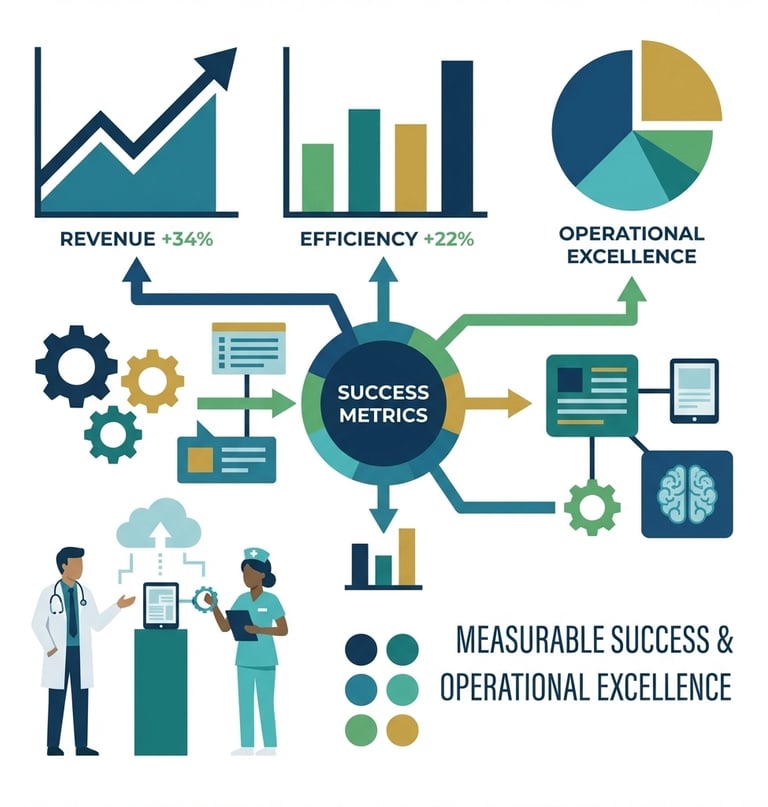
Agencies demonstrating both stable workforce and tech-enabled efficiency are commanding 15-25% valuation premiums in current market conditions. This premium reflects buyer confidence in post-acquisition scalability and operational predictability.
12-Month Action Plan for Agency Owners
Months 1-3: Foundation Assessment
• Conduct full workforce cost analysis, including hidden turnover expenses
• Audit current technology stack for gaps in HR, scheduling, and performance tracking
• Benchmark your retention rates against regional and national averages
• Calculate current labor cost per patient day and identify optimization targets
Months 4-6: Strategic Implementation
• Deploy integrated HR-tech platform that connects recruitment, onboarding, and retention tracking
• Implement merit-based compensation framework linked to patient outcomes and efficiency metrics
• Establish clinical career pathways that provide advancement without requiring management roles
• Create cross-training programs that improve workforce flexibility and reduce overtime costs
Months 7-9: Performance Optimization
• Use predictive analytics to proactively address retention risks
• Optimize scheduling algorithms to improve work-life balance and reduce burnout
• Implement patient satisfaction feedback loops that directly reward clinical teams
• Document all processes to demonstrate scalability to potential buyers or partners
Months 10-12: Market Positioning
• Compile performance data demonstrating both workforce stability and operational efficiency
• Prepare acquisition-ready financial documentation showing labor cost predictability
• Position integrated workforce-tech strategy as competitive moat in buyer discussions
• Evaluate strategic partnership opportunities that leverage your demonstrated operational excellence
Special Considerations for Hospice Agency Owners
Hospice agencies face unique workforce-technology integration challenges that require specialized approaches. The emotional demands of end-of-life care create different retention dynamics, while regulatory requirements for specialized training add complexity to scaling efforts.
Hospice-specific workforce strategies:
• Implement peer support programs that address emotional burnout before it leads to turnover
• Use technology to identify families requiring additional emotional support resources
• Create flexible scheduling that accommodates the unpredictable nature of end-of-life care
• Develop mentorship programs linking experienced clinicians with new hires
Technology applications for hospice:
• Grief support platforms that extend care team capabilities
• Predictive analytics for identifying patients requiring intensive support
• Mobile documentation systems that reduce administrative burden during patient visits
• Family communication platforms that improve satisfaction and reduce clinical workload
The Exit Value Connection: Why Integration Matters for Your Sale
Agency owners considering exit or succession planning within the next 24 months need to understand that buyer preference has shifted decisively toward operationally mature organizations. The days of multiple expansion based purely on revenue growth are ending: buyers now underwrite deals based on operational predictability and scalability potential.
Workforce stability directly impacts deal multiples: Agencies with documented retention above 70% and predictable labor costs trade at 20-30% higher multiples than those with workforce volatility. Technology integration amplifies this premium by demonstrating that the workforce model can scale without proportional management increase.
Due diligence focus areas for 2026 transactions:
• Labor cost predictability across different patient acuity levels
• Technology infrastructure capable of supporting 2x current volume
• Clinical quality metrics that remain stable during growth periods
• Management systems that don't require constant owner involvement
The integration approach positions your agency for premium valuation by demonstrating that growth won't require massive capital injection for workforce infrastructure or management systems.
Taking Action: Your Next Steps
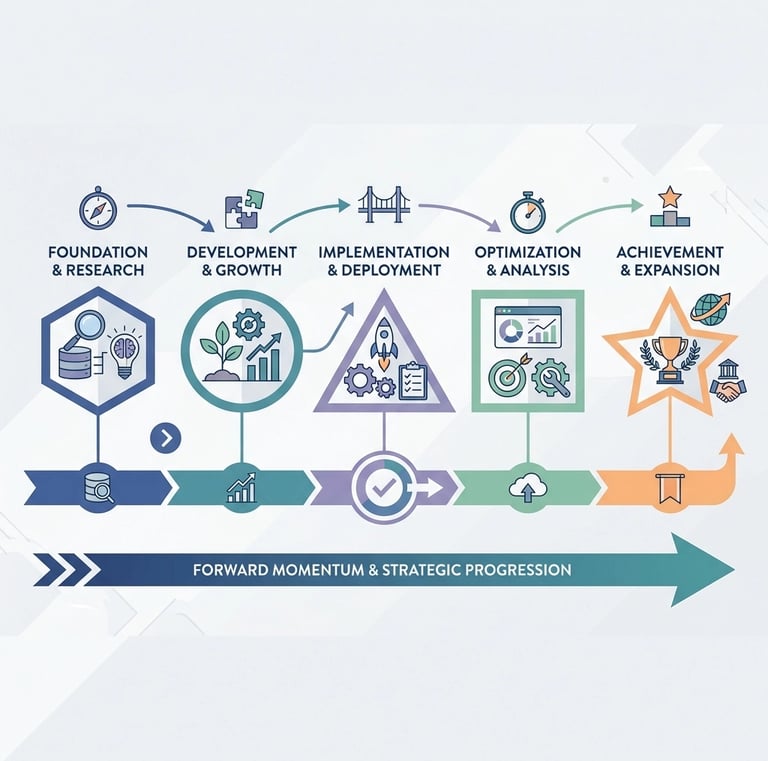
The workforce-technology integration strategy isn't optional for agencies targeting growth or exit in 2026. Market consolidation is accelerating, and buyers have multiple options: agencies that can demonstrate both clinical excellence and operational efficiency will capture premium valuations.
Your immediate priority should be conducting an honest assessment of both workforce stability and technology infrastructure. Identify the gaps that could become deal-breakers during buyer due diligence, then implement solutions that address both people and process simultaneously.
The agencies that will thrive through 2026 market changes are those treating workforce and technology as interconnected elements of a single operational strategy. This integration directly translates to improved EBITDA margins, reduced owner dependency, and enhanced exit value: exactly what buyers and succession partners are seeking.
Ready to evaluate your agency's workforce-technology integration strategy and its impact on your exit readiness? Schedule a healthcare partnership consultation to assess your current positioning and develop an action plan that maximizes your agency's market value while addressing 2026 operational challenges.
Unlock Your 30-Minute Agency Succession Review
Maybe you're ready to expand your reach, or perhaps it's time to consider your legacy and the future of your business. Either way, it all begins with a conversation. Schedule a confidential, no-obligation call to explore what the future might hold for you and your business.
Complete the form, and we'll reach out for a chat...


© 2025 SENATE HEALTHCARE LLC.
ALL RIGHTS RESERVED