The $250 Million Phantom: What the California Hospice Fraud Scandal Means for the Industry
California officials recently uncovered a massive 250 million dollar hospice fraud scheme involving stolen identities and 14 shell companies. This article breaks down how "Operation Skip Trace" worked and why it's a major warning sign for legitimate home health or hospice agency owners. We explain the direct link between compliance and your agency's valuation multiple when it comes time to sell.
4/16/20266 min read


This post explores the massive 250 million dollar hospice fraud scandal in California and its far-reaching consequences for legitimate agency owners. We break down the mechanics of the scheme and discuss how these events impact agency valuations and exit strategies for home health or hospice operators.
Quick-Scan Summary
Who this is for:
Home health or hospice agency owners with 2 million to 10 million dollars in annual revenue.
Operators planning for a sale or succession within the next 1 to 3 years.
Clinical directors focused on compliance and audit readiness.
Key Takeaways:
The California scandal involved 21 individuals using stolen identities and 14 shell companies to steal 250 million dollars from Medi-Cal.
Increased fraud leads to stricter regulatory oversight and a moratorium on new licenses, which affects market competition and consolidation.
For legitimate owners, "bulletproof" clinical documentation is no longer optional; it is the primary driver of your agency's valuation multiple during a sale.
Senate Healthcare looks for clean, compliant agencies to acquire and partner with, viewing compliance as a top-tier asset.
In the world of healthcare, we often talk about "ghost patients" or "paper compliance," but a recent criminal case in California has taken these concepts to a terrifying new level. Imagine a network of 14 hospice companies that collectively billed the government for 250 million dollars without providing a single minute of actual patient care.
This is not a hypothetical scenario. It is the reality of "Operation Skip Trace," a massive investigation led by California Attorney General Rob Bonta. The scheme resulted in 21 individuals being charged with a laundry list of crimes, including healthcare fraud, money laundering, and identity theft.
For those of us operating legitimate home health or hospice agencies, news like this is gut-wrenching. It is not just about the staggering amount of taxpayer money stolen. It is about the shadow it casts over the entire industry. When 250 million dollars vanishes into thin air, the regulatory backlash hits everyone, especially honest owners who are looking to eventually transition their business or find a strategic partner like Senate Healthcare.
The Anatomy of a High-Tech Heist
This was not your average billing error or a case of aggressive coding. This was a sophisticated, multi-layered criminal enterprise. The perpetrators did not just find loopholes; they built a parallel healthcare universe.
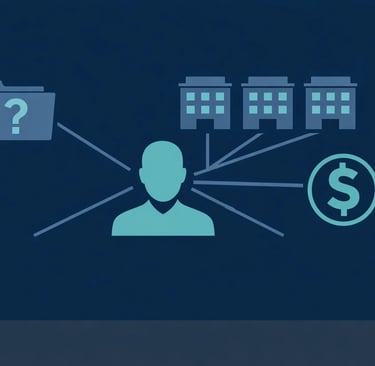
The scheme began on the dark web, where the group purchased stolen personal identifying information. They used these stolen identities to enroll people who did not live in California into the Medi-Cal system. To make the fraud look legitimate, they used "straw owners" to purchase 14 different hospice companies. These companies existed mostly on paper, with fake records and non-existent offices.
The money did not just stay in one place. To hide the trail, the group funneled the 250 million dollars through more than 130 different shell companies. They moved funds across bank accounts, payment apps, and even into cryptocurrency. By the time law enforcement moved in, only about 30 million dollars had been recovered.

Why This Matters to Legitimate Agency Owners
When you are working 60 hours a week to manage nursing shortages and stay on top of the latest Medicare updates, a 250 million dollar fraud case might feel like something happening in a different world. However, the ripple effects are already reaching your front door.
1. The Regulatory Hammer
In response to this scandal, California has implemented a moratorium on new hospice licenses through January 2027. While this might temporarily limit new competition, it also means that existing agencies are under much tighter scrutiny. We are seeing faster, more aggressive audits and more secure, but more cumbersome, online verification processes.
2. The Trust Tax
Every time a headline like this breaks, public trust in hospice care takes a hit. Families who are already hesitant about end-of-life care become even more skeptical. For an owner looking to grow their census or prepare for an exit, this "trust tax" means more effort spent on education and community outreach to prove your agency is one of the good ones.
3. The Valuation Haircut
This is where the rubber meets the road for owners considering a sale. When we at Senate Healthcare evaluate an acquisition, we dive deep into clinical documentation. In a post-Operation Skip Trace world, "good enough" documentation is a major red flag. If a buyer cannot verify the clinical necessity of your patients, they will either walk away from the deal or apply a massive "valuation haircut" to account for the risk of a future government clawback.
A Concrete Valuation Scenario
Let’s look at two hypothetical agencies, both doing 5 million dollars in annual revenue with 1 million dollars in EBITDA (Earnings Before Interest, Taxes, Depreciation, and Amortization).
Agency A has impeccable records. Every patient file has a clear, signed physician order, detailed nursing notes that prove clinical decline, and a clean history of state surveys. In today’s market, we might value a "clean" agency like this at a 6.0x multiple, resulting in a 6 million dollar valuation.
Agency B has some "documentation gaps." Maybe some nursing notes are thin, or the physician signatures are occasionally missing for a few days. Because of the heightened fraud environment, a buyer sees this as a high-risk asset. They might only offer a 4.0x multiple to offset the risk of a UPIC audit. That same 1 million dollars in profit is now only worth 4 million dollars.
That is a 2 million dollar penalty for poor paperwork. In the current climate, compliance is not just a department; it is your most valuable asset.
The "Documentation Burnout" Vignette
Consider the story of "Sarah" (not her real name), an owner of a mid-sized hospice in Southern California. Sarah has always run a tight ship, but lately, she has felt the weight of "audit fatigue." After the news of the 250 million dollar fraud broke, her agency was hit with a random spot check.
Even though she had nothing to hide, the process was exhausting. Her clinical director spent weeks pulling files instead of supervising staff. Sarah realized that while her agency was profitable, her "key-person dependence" on her compliance officer made her business vulnerable.
When Sarah started talking to us at Senate Healthcare, her main goal wasn't just to get a check. She wanted a partner who could bring institutional-grade compliance systems to the table so she could focus on patient care again. She understood that being part of a larger, well-funded portfolio was the best way to protect the legacy she had built against an increasingly hostile regulatory environment.


Plain-Language Glossary
Straw Owner: Someone who puts their name on a business license to hide the identity of the true owner, often used in fraud schemes.
Shell Company: A business that exists only on paper and has no active business operations or significant assets, often used to move or hide money.
EBITDA Multiple: A common way to value a business. You take the annual profit (EBITDA) and multiply it by a number (the multiple) to determine the sale price.
UPIC Audit (Unified Program Integrity Contractor): A highly intensive federal audit focused specifically on identifying fraud, waste, and abuse in Medicare and Medicaid.
So what should you do now?
If you are an owner-operator in the home health or hospice space, you cannot afford to ignore the shifting landscape. Here is how to protect your valuation:
Conduct a "Shadow Audit": Bring in a third party to look at your files as if they were a government investigator. Do not wait for a buyer to find the holes during due diligence.
Tighten Physician Relationships: Ensure that your referring physicians are truly involved in the certification process. "Auto-signing" is a massive liability in 2026.
Invest in Compliance Tech: If you are still relying on paper or outdated software, you are at a disadvantage. Modern systems can flag documentation gaps before they become billing errors.
Evaluate Your Exit Timing: With the moratorium in place and regulatory pressure rising, clean agencies are in high demand. It may be the right time to explore a partnership with a strategic buyer who can help navigate these risks.
Looking Forward
The California hospice scandal is a wake-up call. It reminds us that the "phantom" of fraud doesn't just steal money; it steals the reputation of an industry dedicated to dignity and compassion.
At Senate Healthcare, we are actively looking to acquire and partner with home health or hospice agencies that prioritize integrity. We are not brokers or advisors; we are buyers who believe that high-quality, compliant care is the only sustainable business model in healthcare. If you have built an agency that stands on solid ground, we would like to talk about how we can help you reduce your risk and reach your next chapter.
What are your thoughts on the new California regulations? Do you think the moratorium on new licenses will actually help stop fraud, or will it just hurt legitimate startups? Share your thoughts with us.
Resources:
Unlock Your 30-Minute Agency Succession Review
Maybe you're ready to expand your reach, or perhaps it's time to consider your legacy and the future of your business. Either way, it all begins with a conversation. Schedule a confidential, no-obligation call to explore what the future might hold for you and your business.
Complete the form, and we'll reach out for a chat...


© 2025 SENATE HEALTHCARE LLC.
ALL RIGHTS RESERVED