Stop Losing Deals to Compliance Issues: 7 Documentation Mistakes That Are Killing Home Health Valuations (And How to Fix Them Before Your Next Buyer Call)
Documentation mistakes are costing home health agencies millions in lost deal value during acquisitions and sales. This comprehensive guide reveals the seven critical compliance errors that trigger buyer red flags and provides actionable solutions to fix them before your next buyer call. Learn how proper documentation practices can increase your agency's valuation by 15-25% and position you for a premium exit.
12/29/20255 min read


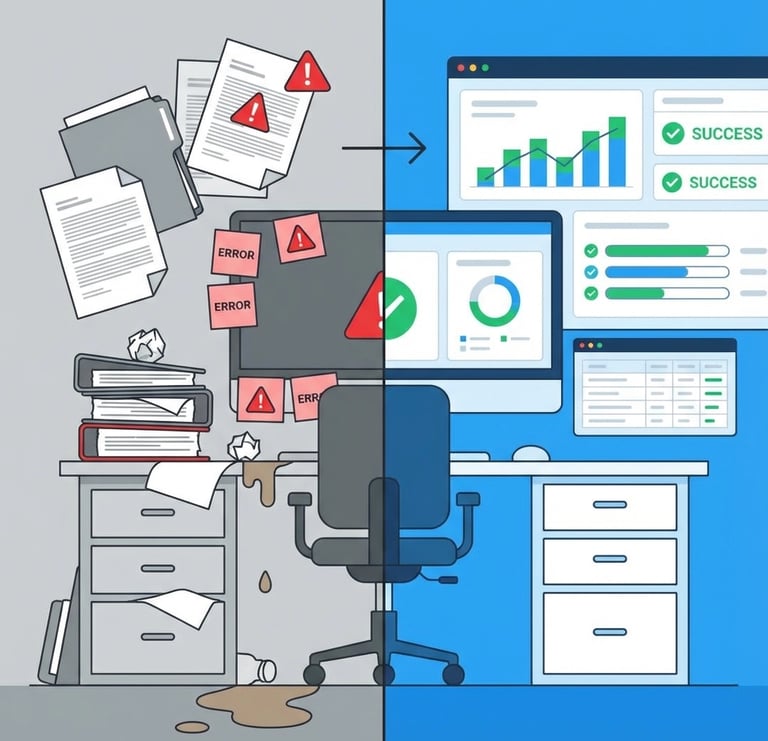
Poor documentation is silently destroying home health agency valuations, with 32% of claims failing federal requirements and 86% of denials being preventable through better record-keeping practices. When buyers discover compliance gaps during due diligence, deal values can drop by 20-40% or collapse entirely.
Why Documentation Directly Impacts Your Sale Price
When private equity firms and strategic buyers evaluate home health agencies, they're not just looking at revenue multiples. They're calculating risk. Poor documentation creates three immediate red flags that slash valuations:
Financial Risk: Documentation errors trigger claim denials, audit penalties, and reduced reimbursement rates that directly impact EBITDA.
Regulatory Risk: Compliance violations signal operational instability and potential future sanctions that buyers factor into their risk assessments.
Operational Risk: Inconsistent documentation practices suggest weak clinical oversight and management systems that require post-acquisition investment to fix.


Smart buyers know that agencies with strong documentation practices typically maintain 3-5% higher profit margins through reduced denials and faster reimbursements. Conversely, agencies with documentation problems often carry hidden liabilities that surface during buyer due diligence.
The 7 Documentation Mistakes Destroying Deal Value
1. Inaccurate Primary Diagnosis Coding
The Problem: Using outdated ICD-10 codes or coding secondary conditions as primary diagnoses creates immediate reimbursement issues and audit triggers.
Why It Kills Deals: Incorrect coding affects your case mix index and reimbursement rates. Buyers see this as evidence of poor clinical oversight and potential compliance violations.
The Fix: Implement monthly coding audits with your clinical team. Cross-reference all diagnoses with current ICD-10 guidelines and ensure your primary diagnosis drives the care plan. Train clinicians to distinguish between primary conditions requiring skilled care versus secondary diagnoses that support the overall treatment strategy.
2. Copy-and-Paste OASIS Documentation
The Problem: Carrying forward previous OASIS responses without updating based on current patient status creates audit red flags and compliance violations.
Why It Kills Deals: CMS auditors specifically look for cloned notes and repeated responses across multiple assessment periods. This practice suggests inadequate patient evaluation and can trigger targeted reviews.
The Fix: Establish a "validate every field" policy for OASIS assessments. Train staff to use prior data as reference only, then reassess each response based on the current visit. Implement peer review processes where senior clinicians spot-check OASIS accuracy before submission.
3. Inconsistent Functional Scoring Between Clinicians
The Problem: Different staff members scoring identical patient activities (bathing, dressing, mobility) inconsistently across visits undermines assessment credibility.
Why It Kills Deals: Inconsistent scoring patterns signal poor clinical standardization and training gaps. Buyers worry about clinical quality and potential audit exposure from unreliable assessments.
The Fix: Create standardized scoring rubrics with specific examples for each functional category. Conduct quarterly inter-rater reliability testing where multiple clinicians assess the same patient scenarios. Address scoring discrepancies through targeted training rather than ignoring them.

4. Incomplete Medication Reconciliation
The Problem: Failing to document all medications, including over-the-counter drugs, supplements, and recent changes, or missing medication adherence assessments.
Why It Kills Deals: Incomplete medication records represent both patient safety risks and compliance gaps. Buyers see this as evidence of inadequate clinical protocols that could trigger liability issues.
The Fix: Develop a comprehensive medication review checklist that includes prescription drugs, OTC medications, supplements, and herbal remedies. Train staff to ask specific questions about medication changes since the last visit and document patient adherence challenges with specific intervention plans.
5. Missing or Late OASIS Reassessments
The Problem: Failing to complete required reassessments within mandated timeframes or missing reassessments entirely due to scheduling issues or staff turnover.
Why It Kills Deals: Late or missing assessments create immediate compliance violations and can trigger automatic claim denials. This demonstrates poor operational controls and regulatory understanding.
The Fix: Implement automated assessment tracking systems that alert clinical managers 5-7 days before reassessment deadlines. Create backup coverage protocols for when primary clinicians are unavailable. Never skip a required assessment period even if it requires overtime or contract staff.
6. Social Determinants of Health Data Source Errors
The Problem: Collecting SDOH information from incorrect sources or failing to follow the required data source hierarchy established in OASIS-E guidelines.
Why It Kills Deals: SDOH data source errors represent a new compliance vulnerability that CMS is actively monitoring. Incorrect data collection methods can trigger audit scrutiny and suggest poor training on current requirements.
The Fix: Train all assessment staff on the specific SDOH data source hierarchy: patient report first, then observation, then caregiver report, then medical record review. Document which source was used for each SDOH item and why. Never guess or estimate when the preferred data source isn't available.


7. Electronic Visit Verification Non-Compliance
The Problem: Missing EVV documentation, manual entry of visit data, or failure to meet state-specific EVV requirements for Medicaid patients.
Why It Kills Deals: EVV violations can result in immediate payment suspensions, contract termination, and exclusion from government programs. Buyers view EVV non-compliance as a deal-breaker due to revenue risk.
The Fix: Implement real-time EVV systems that capture visit data electronically. Train all field staff on proper check-in/check-out procedures. Conduct weekly EVV compliance audits to identify and correct violations before they impact reimbursement.
Creating Deal-Ready Documentation Systems
Strong documentation practices aren't just about compliance. They're about demonstrating operational excellence that justifies premium valuations. Here's how to position your agency as a low-risk acquisition target:
Establish Documentation Standards: Create written protocols for every clinical documentation requirement. Make these protocols part of your employee handbook and reference them during performance reviews.
Implement Quality Checkpoints: Build documentation review into your clinical workflow. Senior clinicians should spot-check assessments before submission, not after problems surface.
Track Key Metrics: Monitor your claim denial rates, audit findings, and documentation correction frequencies. Buyers want to see trending data that demonstrates improving compliance performance.
Document Your Documentation: Maintain records of your quality improvement efforts, training programs, and compliance initiatives. This evidence demonstrates proactive management that buyers value.
The Bottom Line for Your Exit Strategy
Agencies with strong documentation practices typically command 15-25% higher valuations due to reduced risk profiles and stronger operational fundamentals. The time to fix these issues isn't after you've started marketing your agency. It's now.


Poor documentation creates hidden liabilities that surface during buyer due diligence, often resulting in reduced purchase prices, extended earn-out periods, or deal cancellations. The investment in proper documentation systems pays immediate dividends through improved cash flow and positions your agency for a premium exit when you're ready to sell.
If you're considering a sale or succession plan, start with a comprehensive documentation audit. Identify gaps, implement fixes, and create the compliance foundation that supports maximum valuation. As highlighted in our Legacy Planning Secrets analysis, agencies that address compliance issues before going to market typically achieve 20-30% higher sale prices.
For home health owners ready to explore strategic options or succession planning, comprehensive compliance preparation is essential. Our Healthcare Partnership Consultation services help agency owners identify and resolve documentation issues that could impact deal value before they enter the market.
Unlock Your 30-Minute Agency Succession Review
Maybe you're ready to expand your reach, or perhaps it's time to consider your legacy and the future of your business. Either way, it all begins with a conversation. Schedule a confidential, no-obligation call to explore what the future might hold for you and your business.
Complete the form, and we'll reach out for a chat...
© 2025 SENATE HEALTHCARE LLC.
ALL RIGHTS RESERVED