
New Year, New Opportunities: How Home Health and Hospice Owners Can Flip 2026 Market Challenges Into Growth
This comprehensive guide reveals how smart home health and hospice owners are transforming 2026's biggest challenges: Medicare Advantage pressure, labor shortages, and regulatory complexity: into competitive advantages. Learn six proven strategies for turning market headwinds into growth opportunities, whether you're planning to scale, partner, or achieve a premium exit.
1/2/20265 min read


The start of 2026 brings a unique convergence of regulatory shifts, payment pressures, and market consolidation that smart home health and hospice owners can transform into competitive advantages. While headlines focus on reimbursement cuts and compliance burdens, the agencies positioning themselves strategically right now will capture disproportionate market share and premium valuations over the next 18 months.
The 2026 Landscape: Challenges That Create Opportunity
Home health agencies face a 1.3% Medicare payment reduction after CMS scaled back an initially proposed 6.4% cut, while hospice providers benefit from a 2.4% to 2.6% rate increase. But these headline numbers miss the real story: market conditions are creating clear winners and losers based on operational sophistication, not just payment rates.
The agencies thriving in this environment share three characteristics: they've mastered compliance as a competitive moat, they're leveraging technology to drive margin expansion, and they're positioning for strategic partnerships or premium exits. The agencies struggling are still treating compliance as overhead, technology as expense, and growth as organic-only.


Strategy 1: Turn Medicare Advantage Pressure Into Payer Diversification Gold
Medicare Advantage plans now represent 35-40% of the Medicare population, and their utilization management is tightening authorization requirements across both home health and hospice. Rather than viewing this as pure headwind, savvy owners are using MA pressure as leverage to negotiate better commercial rates and develop direct-pay programs.
The key insight: MA plans need you more than you think. High-performing agencies that can demonstrate measurable outcomes: reduced readmissions, shorter length of stay, improved CAHPS scores: can command 15-25% higher per-episode rates than commodity providers. This Medicare Advantage analysis shows how agencies with sophisticated MA contracts trade at valuation premiums of 20-30% over Medicare fee-for-service focused competitors.
The tactical move: Audit your current MA contracts by March 2026. Identify which plans are cutting authorizations versus which are expanding network access. For the expanding plans, propose value-based arrangements that tie your reimbursement to outcome metrics you can control. For the contracting plans, develop fallback strategies including direct-pay options for patients who want to continue service.
Strategy 2: Transform Labor Shortages Into Workforce Differentiation
The home health and hospice labor shortage isn't going away in 2026, but it's becoming a divider between agencies that can scale and those that plateau. The most effective workforce solutions aren't just about recruitment: they're about creating operational systems that make your agency the preferred employer in your market.
Smart owners are investing in three areas: technology that reduces administrative burden on clinical staff, career advancement pathways that retain experienced clinicians, and compensation models that reward outcome-based performance rather than just volume. These investments typically generate 2-3x ROI within 12 months through reduced turnover costs and improved productivity.
The specific opportunity: Agencies that can maintain 85%+ clinician retention rates while scaling census will command premium multiples in any M&A process. Buyers are paying 1-2 additional turns of EBITDA for agencies with demonstrable workforce stability.
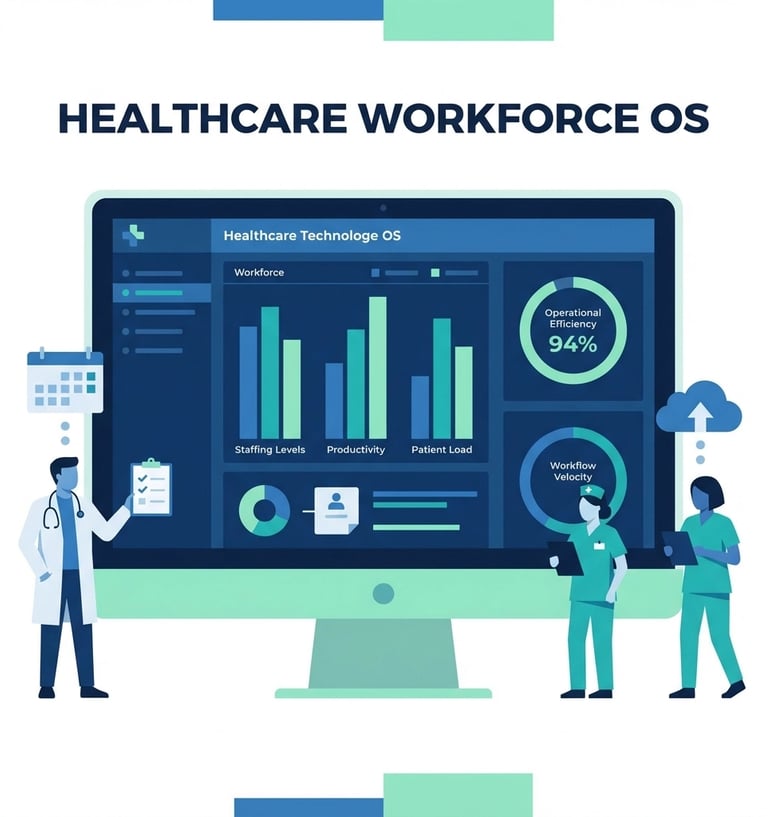
Strategy 3: Leverage Technology Investments for Operational Excellence
AI and automation are moving from "nice to have" to "table stakes" for competitive agencies. But the opportunity isn't just operational efficiency: it's creating defensible competitive advantages through data-driven care coordination and predictive analytics.
The highest-impact technology investments for 2026 focus on three areas: Electronic Visit Verification (EVV) systems that exceed compliance requirements and generate operational insights, clinical documentation platforms that reduce administrative time while improving outcome tracking, and patient engagement tools that drive satisfaction scores and reduce emergency department utilization.
Agencies implementing comprehensive technology platforms typically see 20-30% improvement in operational efficiency within six months, but more importantly, they develop data assets that become increasingly valuable to potential buyers or strategic partners.
Strategy 4: Position for Value-Based Care Partnerships
Value-based care arrangements will represent 50-60% of home health and hospice revenue within five years, but the agencies securing the best contracts are positioning now. Value-based care positioning requires demonstrating measurable impact on total cost of care, not just episode efficiency.
The strategic framework involves identifying health systems or ACOs in your market that are taking downside risk on Medicare Advantage or Medicare Shared Savings Program contracts, then developing service packages that address their specific cost drivers. For home health, this typically means reducing 30-day readmissions and emergency department visits. For hospice, it means demonstrating appropriate utilization patterns and family satisfaction that reduces grief-related healthcare utilization.
Agencies with established value-based contracts command 25-40% higher valuations because buyers view them as having predictable, growing revenue streams with built-in margin expansion opportunities.
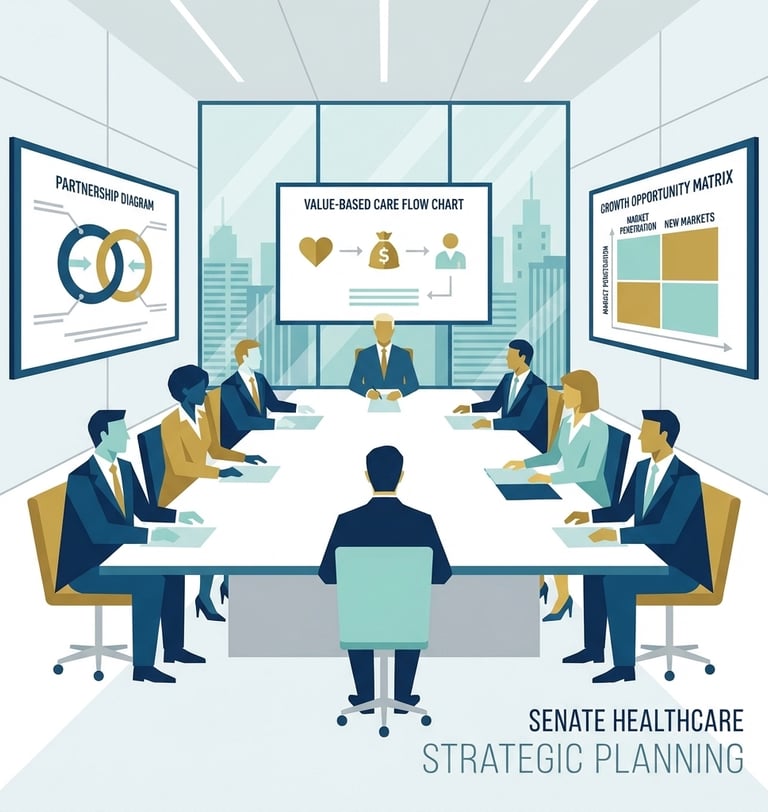
Strategy 5: Master Compliance as a Revenue Driver
Rather than treating compliance as overhead, leading agencies are using regulatory excellence as a competitive differentiator. CMS finalized hospice payment rules create new quality reporting requirements, while home health agencies face continued scrutiny on PDGM coding accuracy and OASIS completeness.
The opportunity lies in exceeding minimum compliance standards to achieve quality bonus payments and preferred provider status with referral sources. Agencies with consistently high CMS star ratings, low denial rates, and strong CAHPS scores typically generate 10-15% higher net margins than peers through reduced administrative costs and premium contracts.
The tactical approach: Conduct a comprehensive compliance audit by February 2026, focusing on documentation practices, coding accuracy, and quality reporting systems. Agencies that can demonstrate best-in-class compliance during M&A due diligence avoid 15-25% purchase price discounts that buyers typically apply for regulatory risk.
Strategy 6: Execute Strategic Planning for Maximum Optionality
The most valuable insight for 2026: agencies that prepare for multiple strategic scenarios: continued growth, strategic partnerships, or premium exits: consistently outperform those focused on single outcomes. Legacy planning strategies show how operational improvements compound into valuation premiums when executed systematically.
Whether you're planning to grow, partner, or exit, the fundamental value drivers remain consistent: predictable revenue streams, operational scalability, regulatory excellence, and defensible market position. Agencies that excel in these areas create options, while those that don't get trapped in reactive planning.


Making 2026 Your Growth Year
The agencies that will dominate their markets over the next 18 months are those treating current challenges as strategic opportunities rather than obstacles to manage. They're investing in technology, workforce, and operational excellence not as costs but as competitive advantages that compound over time.
The key insight: market consolidation, regulatory complexity, and payment pressures create barriers to entry that protect well-positioned agencies while eliminating weaker competitors. This environment rewards strategic thinking and operational excellence more than ever before.
For owners considering their options, 2026 presents a unique window to either position for premium exit opportunities or build sustainable competitive advantages for long-term growth. Healthcare partnership consultation can help identify which strategic path aligns with your specific market position and growth objectives.
The agencies that execute these strategies systematically over the next 12 months will emerge from 2026 stronger, more valuable, and better positioned for whatever market conditions follow.
Unlock Your 30-Minute Agency Succession Review
Maybe you're ready to expand your reach, or perhaps it's time to consider your legacy and the future of your business. Either way, it all begins with a conversation. Schedule a confidential, no-obligation call to explore what the future might hold for you and your business.
Complete the form, and we'll reach out for a chat...


© 2025 SENATE HEALTHCARE LLC.
ALL RIGHTS RESERVED