
Looking For a Growth Partner? Here Are 10 Things You Should Know Before Signing an LOI
Thinking about selling your home health or hospice agency? Don't sign that Letter of Intent until you understand the hidden levers that control your actual payout. This guide breaks down the 10 most critical deal terms, from cash-at-close to exclusivity periods, specifically for agencies in the $2M to $10M range. Learn how to protect your legacy and maximize your valuation in the 2026 market.
4/13/20267 min read


This article explores the critical components of a Letter of Intent for agency owners looking to transition their business to a strategic buyer. It provides a practical roadmap for home health or hospice operators to protect their valuation and ensure a smooth partnership.
Quick-Scan Summary
Who this is for:
Home health or hospice owners with annual revenues between $2 million and $10 million who are considering an exit or a growth partnership.
Key takeaways:
A Letter of Intent (LOI) is the most important document you will sign because it sets the floor for your valuation and terms.
Focus on the cash you receive at closing rather than a flashy headline number that might be tied up in risky earn-outs.
Senate Healthcare LLC acts as the direct buyer, meaning we focus on long-term stability rather than flipping your agency for a quick profit.
Negotiating terms like exclusivity and employee retention upfront prevents surprises during the deep dive of due diligence.
You have spent years building your home health or hospice agency. You have weathered the storms of changing CMS regulations, navigated the chaos of staffing shortages, and likely missed more than a few family dinners to make sure your patients were cared for. Now, you are at a crossroads. Maybe you are tired of the administrative grind, or perhaps you see the massive consolidation happening in 2026 and realize that scaling alone is getting harder by the day.
When a buyer like Senate Healthcare LLC expresses interest, the first major milestone is the Letter of Intent, or LOI. It feels like a win, and it is, but it is also a bit of a trap if you are not careful. Think of the LOI as the engagement period before the marriage. It is where you decide who pays for what, who stays in the house, and what happens if things go sideways.
The 2026 Market Context
Right now, the healthcare M&A market is a bit of a wild west. We are seeing a lot of pressure from Medicare Advantage plans and tightening margins due to labor costs. If you are running a lean, high-quality agency with revenue in the $2M to $10M range, you are a prime target for acquisition. However, many owners are getting burned because they focus on the big number at the top of the page and ignore the fine print that actually determines how much money hits their bank account.
Owner Pain Points: The "What If" Factor
The most common fear we hear from owners is the loss of culture. You know your nurses. You know your patients. The thought of a massive, faceless corporation coming in and turning your agency into a spreadsheet is terrifying. There is also the fear of the valuation haircut. This happens when a buyer offers a high multiple, but then uses due diligence to chip away at that price until you are left with far less than you expected.
At Senate Healthcare LLC, we operate differently. We are the buyer, not a broker looking for a commission. We are looking for partners where we can provide the back-office muscle so you can focus on what you actually like doing, or so you can step away entirely knowing your legacy is safe.


10 Things You Need to Know Before You Sign
Before you put pen to paper, you need to understand these ten points. They will make the difference between a smooth exit and a year of headaches.
1. The Actual Dollar Amount Matters More Than the Multiple
People love to brag about getting an 8x or 10x multiple. But a multiple is just a math equation that can be manipulated. If the buyer decides your EBITDA is lower than you think it is, that high multiple doesn’t mean much. Agree on a specific dollar amount in the LOI to lock in the baseline value.
2. The Downstroke: Cash is King
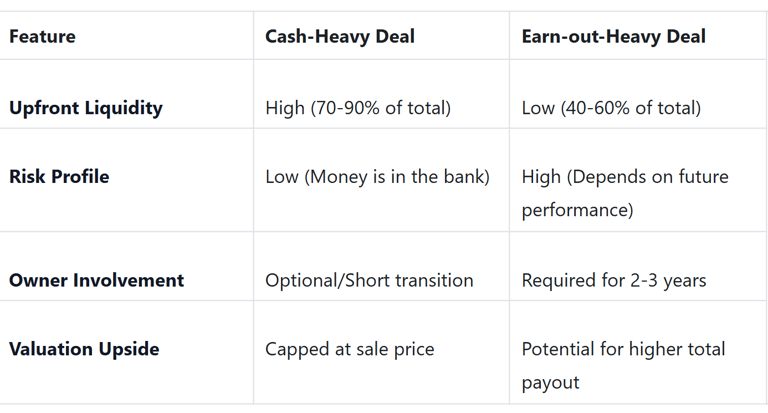
In the M&A world, the downstroke is the cash you get at the moment of closing. You might see a $10 million offer, but if only $4 million is cash and the rest is tied up in a five-year earn-out, that is a very different deal. Aim for the highest possible upfront payment to de-risk your exit.
3. Currency and Liquidity
Are you getting paid in US dollars, or are you getting stock in the buying company? Stock can be great if the company grows, but you can’t pay your mortgage with unvested shares in a private entity. Make sure you know exactly what form your payment will take.
4. Earn-out Terms Must Be Controllable
An earn-out is basically a promise of future money if the agency hits certain goals. If you agree to an earn-out, make sure the goals are based on things you can control, like patient census or clinical quality scores, rather than company-wide net profit which can be skewed by corporate overhead you don’t manage.
5. Debt and Liability Treatment
Does the buyer take on your existing equipment leases and business loans, or is that deducted from your sale price? You need to know if the price on the LOI is "debt-free, cash-free," which is industry speak for saying you have to pay off all your debts out of your proceeds before you walk away.
6. The Exclusivity Period
Once you sign an LOI, you are usually barred from talking to any other buyers for 60 to 90 days. This is called the "no-shop" clause. Keep this period as short as possible. If a buyer drags their feet for four months and then backs out, you have lost valuable time and momentum.
7. Your Post-Sale Role
Do you want to stay on as a Clinical Director? Do you want to consult for six months and then head to the beach? Your post-sale employment terms, including salary and benefits, should be outlined early. Don't leave your future schedule up to chance.
8. Employee Retention and Benefits
Your team is the backbone of your agency. Will the buyer honor their years of service? Will their health insurance change? If you want to protect your staff, make sure there are commitments in the LOI regarding the treatment of your existing employees.
9. Working Capital Requirements
Buyers expect the business to come with enough cash to keep the lights on for the first month. This is called the working capital target. If you strip all the cash out of the business the day before closing, the buyer will likely reduce the purchase price by that same amount.
10. Long-form vs. Short-form LOI
While it is tempting to sign a quick two-page document, a long-form LOI is usually better. It forces both parties to deal with the hard questions upfront. It is much better to have a deal fall apart over a disagreement in the LOI stage than to have it fail three months later after you have spent $50,000 on lawyers and accountants.
Concrete Valuation Scenario
Let’s look at a hypothetical hospice agency with $5 million in annual revenue.
Revenue: $5,000,000
EBITDA Margin (15%): $750,000
Market Multiple: 5.5x
Total Valuation: $4,125,000
If a buyer offers you a $4.1 million deal with 80% cash at close, you walk away with $3.3 million on day one. If another buyer offers you $5 million but only 40% cash at close, you only get $2 million on day one. The "lower" offer is actually much safer and often better for the owner. Understanding this math is key to evaluating any home health acquisition or hospice partnership.
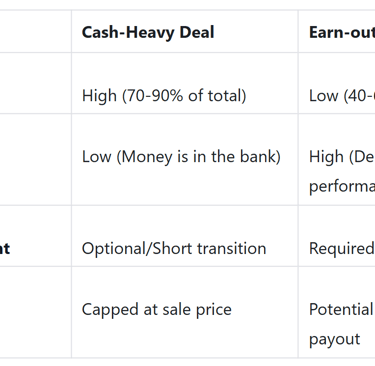
Comparison: Deal Structure Impact


Plain-Language Glossary
EBITDA: Earnings Before Interest, Taxes, Depreciation, and Amortization. Basically, it is a measure of your agency's cash flow.
LOI: Letter of Intent. A non-binding agreement that outlines the main terms of a sale.
Due Diligence: The "colonoscopy" of business. The buyer looks at every chart, every bank statement, and every employee file to make sure the business is what you said it is.
Multiple: The number a buyer multiplies your EBITDA by to get the purchase price.
Working Capital: The money needed to handle day-to-day operations like payroll and supplies.
Why Exit Timing Matters
Wait too long, and you risk a dip in the market or a change in reimbursement models that could slash your valuation. Sell too early, and you might leave money on the table. The sweet spot is usually when your agency is performing well but you still have a little gas left in the tank to help with the transition. If you are feeling the burnout now, the best time to start the conversation was yesterday.
So what should you do now?
Clean up your books: Make sure your personal expenses are not mixed in with the business finances.
Focus on your quality scores: High Stars or HOPE readiness scores drastically increase your multiple.
Check your contracts: Ensure your payer contracts and leases are assignable to a new owner.
Start a conversation: You don't need to be ready to sell today to talk to a buyer like Senate Healthcare LLC.
If you are looking for a growth partner who understands the clinical side of the business and isn't just looking to strip assets, let's talk. We acquire home health and hospice agencies with a focus on long-term sustainability and patient care. We are not brokers. We are the partners who will help you secure your legacy and your financial future.
Unlock Your 30-Minute Agency Succession Review
Maybe you're ready to expand your reach, or perhaps it's time to consider your legacy and the future of your business. Either way, it all begins with a conversation. Schedule a confidential, no-obligation call to explore what the future might hold for you and your business.
Complete the form, and we'll reach out for a chat...


© 2025 SENATE HEALTHCARE LLC.
ALL RIGHTS RESERVED